
Reimagining shopping experience as Intelligent, Interactive Experiences
Designing AI-powered agents that transform static websites into immersive, conversational, and conversion-driven environments.
Background
Napster’s shift into AI and 3D experiences opened an opportunity to rethink what a “website” is.

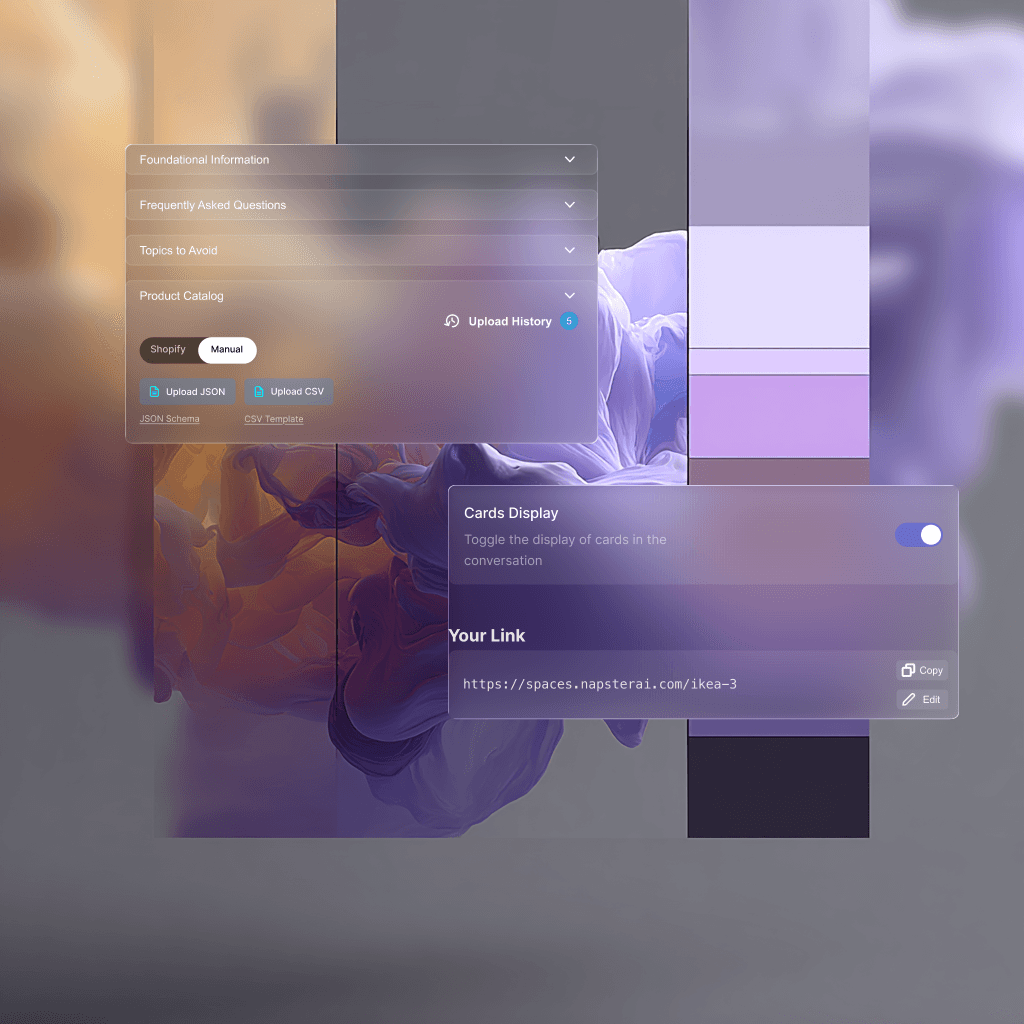
Current Experience

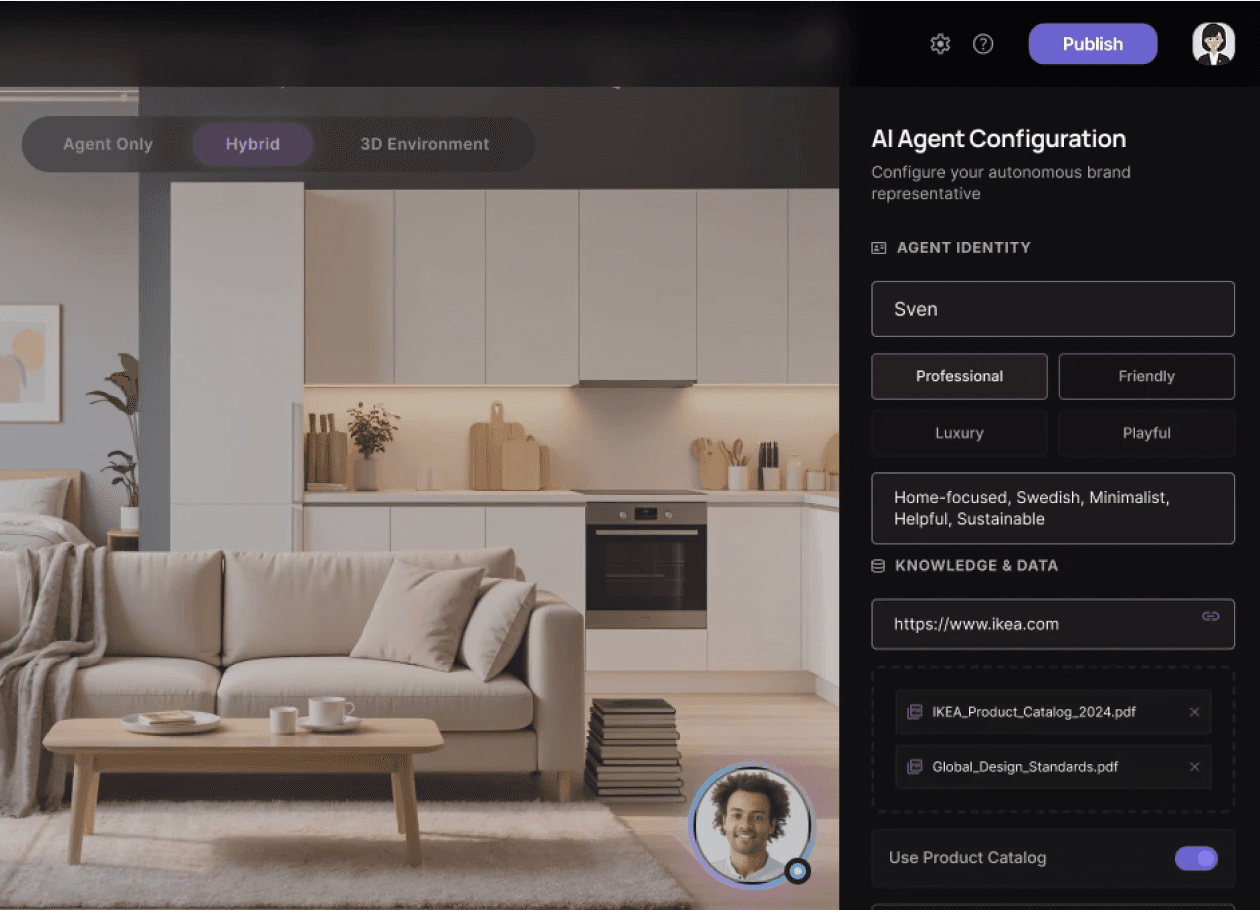
My Redesign → Agents

🧠 Overview
Napster’s shift into AI and 3D experiences opened an opportunity to rethink what a “website” is.
Instead of static pages, I explored a new paradigm:
→ AI Agents embedded within immersive 3D environments that understand, guide, and sell.
This project focuses on:
Reframing “avatars” → Agents
Designing an AI-first product experience
Creating a scalable system for businesses to generate interactive storefronts
🚨 Problem
Modern websites are:
Static and passive
Overloaded with information
Lacking personalization
Dependent on users to navigate and search
Even with chatbots, experiences feel:
Detached from the product
Scripted and unintelligent
Visually disconnected from the brand
👉 Businesses need a way to:
Engage users instantly
Guide decision-making
Increase conversions
Stand out in an AI-driven future
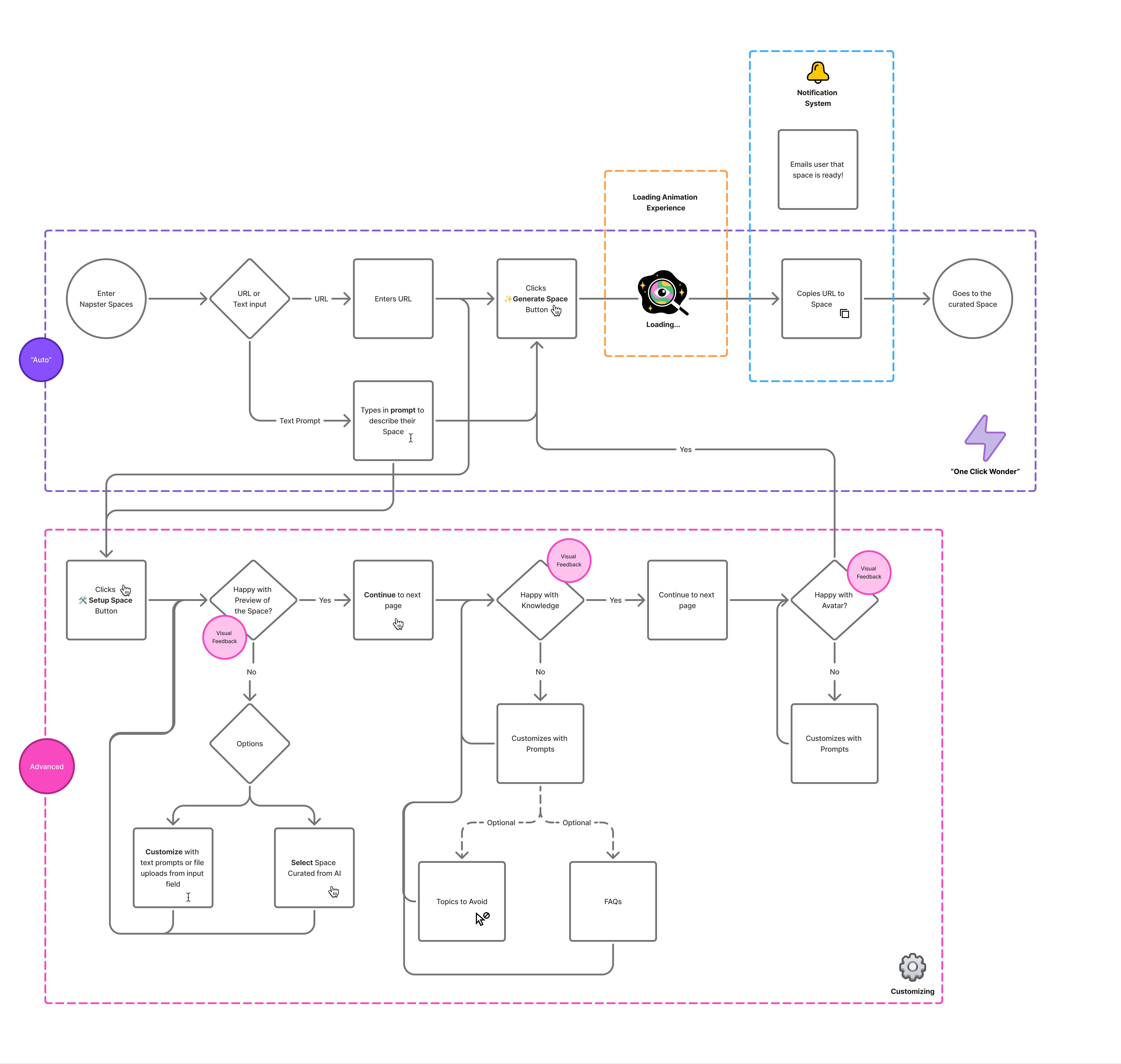
🔀 Quick UX User Flow:
💡 Opportunity
What if a website could:
Talk to you
Understand your intent
Show you products visually
Adapt in real time
→ Not a chatbot
→ Not a webpage
But a living, intelligent experience
🔁 Concept Shift
❌ Before: Avatars
Decorative
Static or scripted
Limited utility
✅ After: Agents
Intelligent
Context-aware
Connected to real data (products, inventory, brand)
Definition:
Agents are AI-powered interfaces that can reason, guide, and act on behalf of a business.
🧩 Core Concept
Napster Spaces → Agent System
A platform where businesses input their website URL and instantly generate:
🧍 AI Agent (brand representative)
🌍 3D immersive environment
🛍️ Product-aware experience
💬 Conversational interface
⚙️ Experience Modes
Users can deploy the agent in 3 flexible ways:
Embedded Agent
Chat bubble on existing site
Lightweight integration
Modular Experience
Section within a webpage
Combines agent + product display
Full Immersive Page
Dedicated 3D environment
Fully interactive brand world
🧭 Design Approach
Phase 1: Immediate UX Wins
Using Jakob Nielsen’s 10 heuristics and design psychology, I focused on:
Reducing cognitive overload
Improving hierarchy
Simplifying decision-making
Increasing clarity of actions
Key Structural Change
Before:
Stepper-based flow
Fragmented decisions
Hidden options
After:
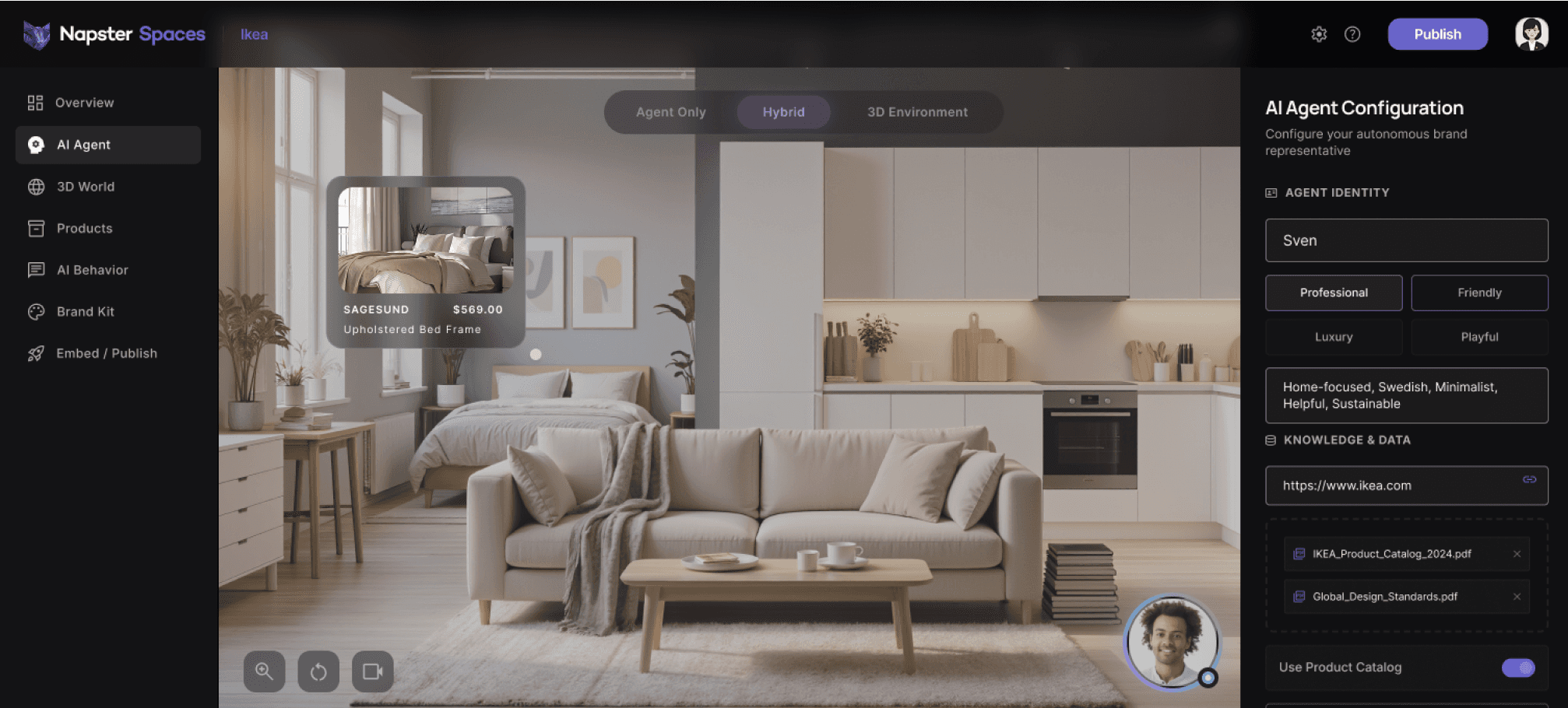
Left sidebar → navigation
Right panel → contextual editing
Central canvas → live preview
👉 This creates:
Spatial clarity
Faster iteration
Better mental model
🧠 AI Interaction Model
Instead of prompting → waiting → retrying…
I introduce:
Agent + Context Awareness
Understands products
Answers questions naturally
Recommends based on intent
Data Integration
Connects to:
Website content
Product catalogs
External AI models (ChatGPT, Claude)
👉 Example:
“I need a couch for a small apartment”
→ Agent filters, explains, visualizes options instantly
🎨 Visual Direction
Glassmorphism-inspired UI
Dark overlays for readability
Immersive 3D backdrops
Minimal UI to reduce noise
Goal:
Let the environment + agent do the work, not cluttered UI.
🧪 Product Thinking
MLP > MVP
Instead of building everything:
Focus on Minimum Lovable Product
Ship in feature bursts
Test quickly with users
⚠️ Key Challenge
❗ Stakeholder Alignment
The product direction was constrained by strong opinions around:
“Auto vs Advanced” setup model
This created friction in:
Simplifying the experience
Introducing more flexible interaction models
👉 This required:
Strategic framing
UX justification
Gradual iteration vs. overhaul
📉 Reflection
What Didn’t Work
I initially tried to design for:
Consumers
SMBs
Enterprise
👉 This diluted focus and clarity.
What I’d Do Next
Focus on one primary user segment first
Likely: e-commerce brands
Build deep, not wide
🚀 Future Vision
Napster Spaces can evolve into:
AI-powered storefront builders
Agent-driven customer journeys
Fully personalized digital experiences
👉 Long-term vision:
Websites become agents.
Navigation becomes conversation.
Shopping becomes immersive.
🧩 Why This Matters
This project demonstrates:
AI product thinking
System design beyond UI
Strategic direction-setting
Ability to design for emerging paradigms